Master the Art of
Space Economy
Master the skills to build resource-efficient, sustainable, and impactful space economy systems.
Why Learn Space Economy?
Built for the next generation of space innovators
Designed for freshers, engineers, and working professionals ready to enter the space economy.
Industry-aligned curriculum
Designed with leading space organisations and hiring companies to match real-world requirements.
Build real-world projects
Learn by designing, simulating, and deploying actual space economy use cases and missions.
AI-powered assessments
Get instant feedback, personalised insights, and adaptive assessments throughout your journey.
For freshers & professionals
Whether you're just starting out or pivoting careers, our structured path gets you there faster.
Career paths you can unlock
Start Your Frugal Space Economy Journey
Explore our featured bootcamp
Tailored to help you master Frugal Space Economy skills and advance your career.
Featured Bootcamp
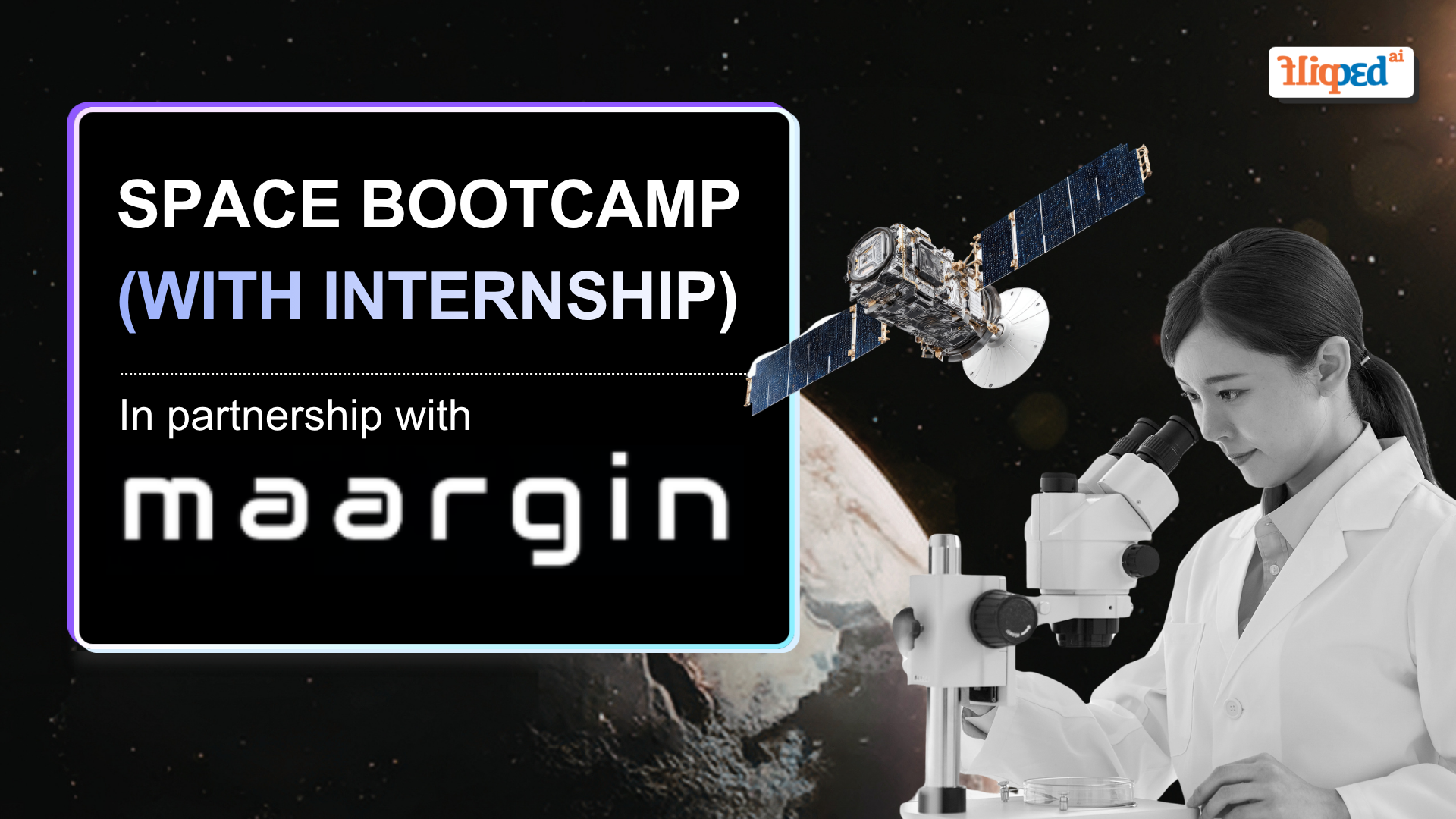
Frugal Space Bootcamp (with Internship)
A deep-dive into frugal space systems in partnership with Maargin. Hands-on projects, live mentorship, and a real internship — available both remotely and in-person.
💰 ₹50,000 + GST
Includes:
- Why traditional space missions cost too much
- Frugal mission design principles
- CubeSat & small-sat technical stack
- Ground station & data optimisation
- Launch cost reduction strategies
- Sustainable orbital economy
- AI in Space — model development
- AI infra for space applications
- Synthetic dataset generation
- Internship with Maargin
A Paradigm Shift in Space Development
Space Economy represents a distinct paradigm compared to traditional, resource-intensive space programmes.
| Feature | 🚀 Space Economy | 🛸 Traditional Space |
|---|---|---|
| Resource Use | Minimal Lean hardware, low-power systems, optimised data pipelines | High Massive infrastructure, high-power systems, extensive data centres |
| Sustainability | Conscious Low debris, orbital stewardship, minimal carbon footprint | Intensive High debris risk, significant launch emissions |
| Cost | Optimised Lean CapEx, reduced TCO, commercial-off-the-shelf components | Expensive Billions in infrastructure; uncertain ROI timelines |
| Accessibility | Democratised CubeSats, nano-sats, lower barriers for startups & nations | Limited Restricted to major nations and well-funded corporations |
| Performance | Optimised for mission efficiency; excels in Earth observation, comms, and science | Potential for large-scale deep space and complex missions |
| Data Requirements | Focus on quality and edge processing; effective with constrained downlink | Relies on high-bandwidth ground networks and large data centres |
| Speed to Deploy | Fast Months from concept to orbit with lean satellite stacks | Slow Years of development and testing cycles |
| Design Approach | Constraint-driven, mission-first, value-focused engineering | Scale-first, performance-maximising, complex systems integration |
| Primary Beneficiaries | Startups, emerging space nations, academic institutions, SMEs | Large government agencies, defence contractors, tech giants |
A Paradigm Shift in Space Development
Space Economy is about designing space systems that achieve high impact with minimal resources, while advancing responsible and resource-efficient solutions.
Do more with less
Across launch mass, power, compute, bandwidth, and capital expenditure.
Environmentally conscious
Minimal orbital debris, responsible deorbiting, and low-emission launch strategies.
Accessible innovation
Democratise space for emerging nations, startups, and underserved communities globally.
Scalable impact
Constellations that grow efficiently without proportional resource increases.
Mission-first design
Problem-first, value-focused engineering that eliminates unnecessary complexity.
Commercial viability
Optimised CapEx, lean OpEx, and reduced TCO for real commercial returns.